

-

- 06 February 2026
- Comment (0)
My Interview with Legendary Sports Broadcaster, James Brown
By Julia FosahNEW YORK – It’s not every day you interview a legend inside The Drew Barrymore Show’s CBS Studio green room in New York City. They don’t film on Fridays, which meant we basically had the whole floor to ourselves. Outside, half of Manhattan was blocked off because President Donald Trump was nearby at Fox. Inside, we were waiting on sports broadcaster James Brown–and the minute he walked in, the whole room seemed to wake up.
He stepped in wearing a navy blazer, calm and focused. He apologized for the holdup, dropped his leather bag, and quickly settled. Within minutes, he was stationed in the interview chair, lightly touching his makeup while cracking a warm smile.
Before the cameras rolled, he looked at me and asked, “So, how did you get involved with this?” He didn’t rush through the question–he actually wanted to know. Then, just before we began, he asked if we could open the interview in a prayer. The space instantly felt grounded. The moment felt calm but charged, the kind of focus that follows him everywhere he goes.
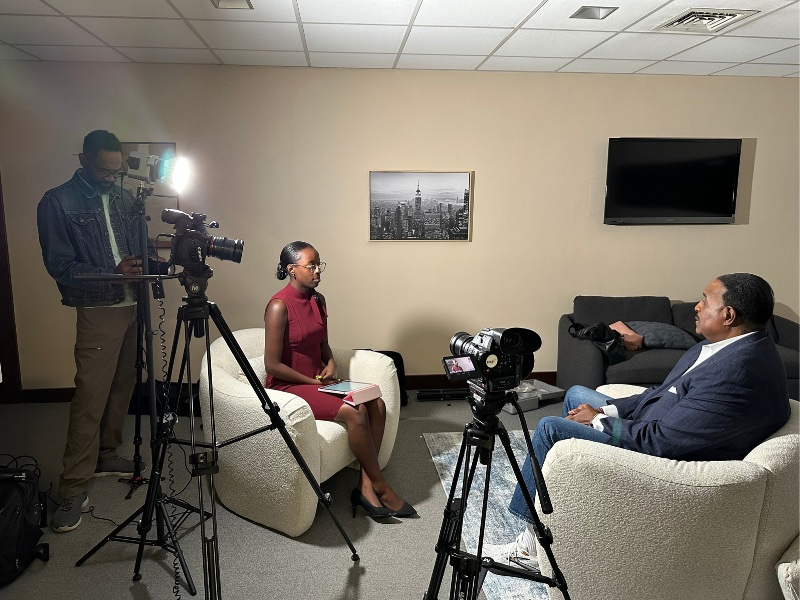
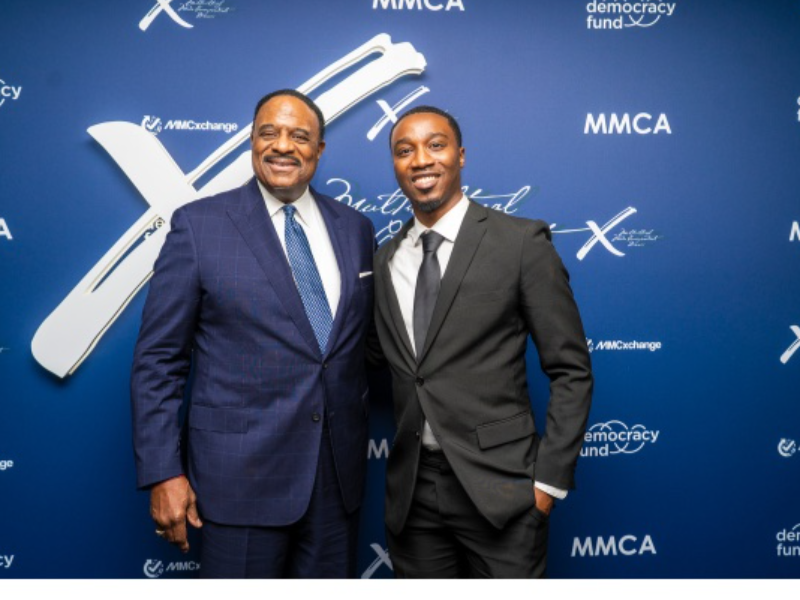
Photo Credit: Professor Edward Robinson (Featured James Brown, Professor Edward Harris and Morgan State University School of Global Journalism and Communication student Julia Fosah)
Click here and photo to view full interview
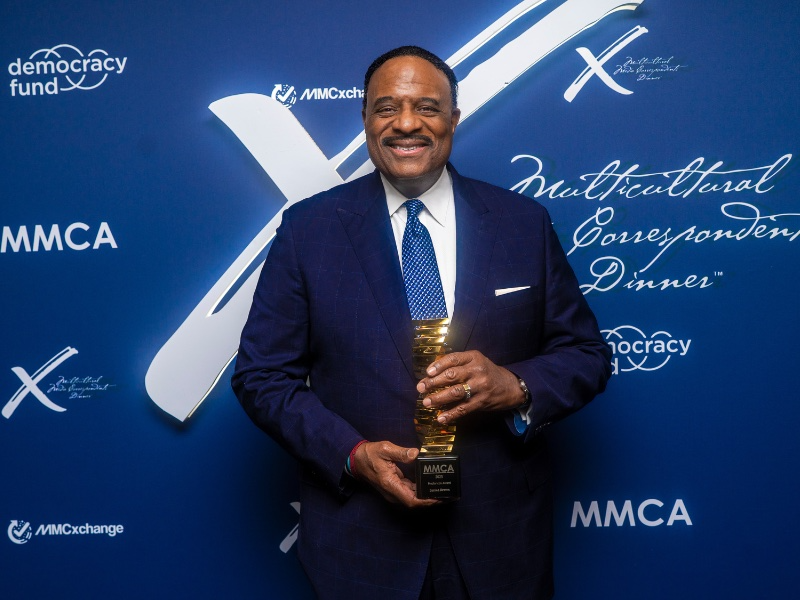
That’s JB. Legendary broadcaster. Mentor. Man of faith. And this year, he’s being honored with the Media Icon Award at the 10th Annual Multicultural Media Correspondents Dinner Gala Extravaganza–not just for his career, but for the character behind it.
Before there were Emmys or Sunday broadcasts, there was a missed layup. “I blew the layup with nobody even defending me,” Brown said, laughing at the memory. He was a kid trying to make his middle school basketball team, and even though he missed the shot, his coach kept him–not for his skill, but because he paid close attention.
That lesson stuck. At DeMatha Catholic High School, under legendary coach Morgan Wootten, Brown learned what discipline and leadership truly meant. “Coach Wootten built on the foundation my parents had already set at home,” he said. “He made it clear that there’s no substitute for hard work, faith, and perseverance.”
Brown carried that foundation to Harvard University, where he captained the basketball team and eventually caught the attention of the Atlanta Hawks. But his dream was cut short when he was released before the season started. “I hid in the house for two weeks,” he said. People wanted him to blame the coach, and he told them, “If I point a finger of blame at somebody, there are three pointing right back at me.”
That disappointment became a turning point. “I realized that I didn’t work as smart and as hard to stay on top as I did to get to the top,” he said. From then on, he focused on preparation–making sure that when the next opportunity came, he would be ready for it.
That mindset shaped everything that came after. Radio shock jock Petey Greene encouraged Brown to take his first step into broadcasting. Greene told him about an opening to cover the Washington Bullets and pushed him to give it a try. Brown took the advice, went in for the audition, and got the job.

Photo Credit: Mary Kouw (Click here and photo to view interview)
That debut led to work with BET, CBS Sports, and later FOX NFL Sunday, where he became one of the most recognizable voices in sports. Even now, Brown says he keeps what he calls a “free agent’s mentality.” He explained that no matter how long he’s been in the business, he approaches every season with the same drive and discipline–as if he’s still earning his spot.
His work ethic is grounded in faith. “One of the scriptures that drives me is Colossians 3:23,” he said. “Do what you do heartily unto the Lord and not unto man. The point being, if I work diligently at it and please Him, my bosses can’t help but be satisfied.”
Jackie Jones, dean of the School of Global Journalism and Communication at Morgan State University ("SGJC"), has known Brown for 45 years. They first met when she was producing Inside Sports and he was a young color commentator shadowing Harold Bell. “He was the homeboy doing good,” she said with a smile.
Jones has watched Brown grow into the kind of professional who inspires others by example. “He walks the talk,” she said. “He’s at a place where he doesn’t have to work hard–but he still does…If it weren’t for his wife, he would never say no,” she added, laughing. “He’s just that giving.”
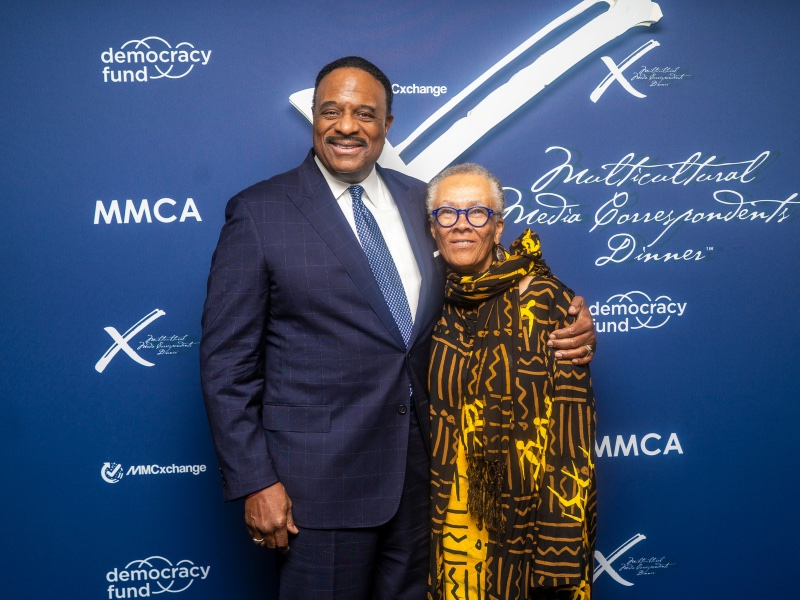
Photo Credit: Mike Style Studio (Featured James Brown, NFL Today on CBS and Jackie Jones, Dean of Morgan State University School of Global Journalism and Communication insert video interveiw Making It)
As a member of the committee that selects honorees for the Media Icon Award, Jones said choosing Brown was an easy decision. “His reach goes far beyond sports,” she said. “He’s exactly what an icon should be.”
Veteran sports columnist David Aldridge also reflected on Brown's influence. Like Brown, Aldridge grew up in Washington D.C. and attended DeMatha. “I knew about his exploits at DeMatha,” he said. “JB was certainly one of the better players who ever came through that program.”
He remembered first seeing Brown on screen covering the Washington Bullets. “Seeing someone look like me doing TV and being a reporter, I thought, wow… maybe I could do that,” he said. “It was very affirming.”
Aldridge, who has worked for ESPN and Turner Sports, is currently a senior columnist at the Athletic. He received the Curt Gowdy Media Award from the Naismith Memorial Basketball Hall of Fame in 2016.
In his case, game recognizes game.
“There’s just not many people that have his résumé,” Aldridge said. “He’s been able to move back and forth between sports and news and do it at the highest level.”
When asked what young journalists should learn from Brown, Aldridge didn’t hesitate when he said JB didn’t skip a step. “He started local, covering basketball, and built from there. You have to build up because when you get there, you have to be able to produce,” he said.
He also described Brown in one word: class. “You never saw him do anything that made you think, ‘Why did you do that?’ He’s been excellent and classy in everything he’s done and that’s something we all aspire to.”
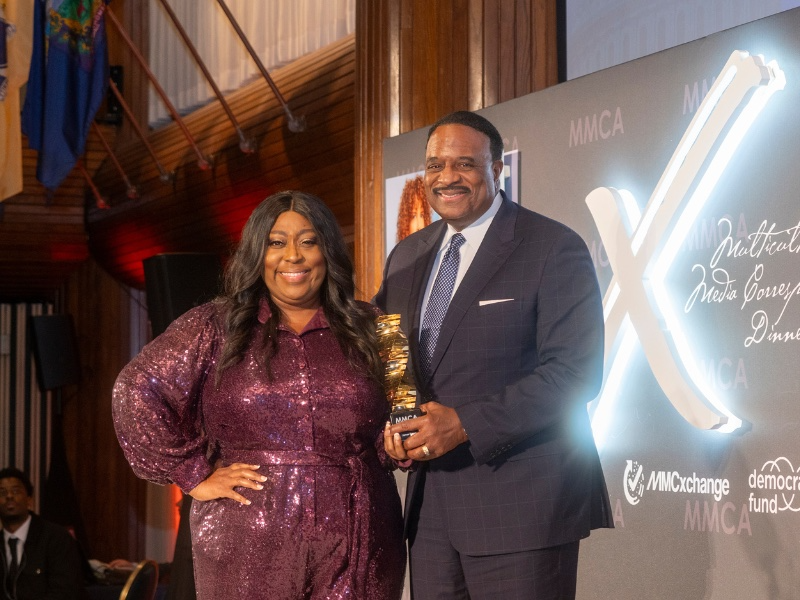
As the interview came to an end, Brown reflected on what the award means to him. “I’m proud to receive the Multicultural Media Icon Award,” he said. “Not just for what it represents, but because it hopefully lays a foundation for others coming behind me.”
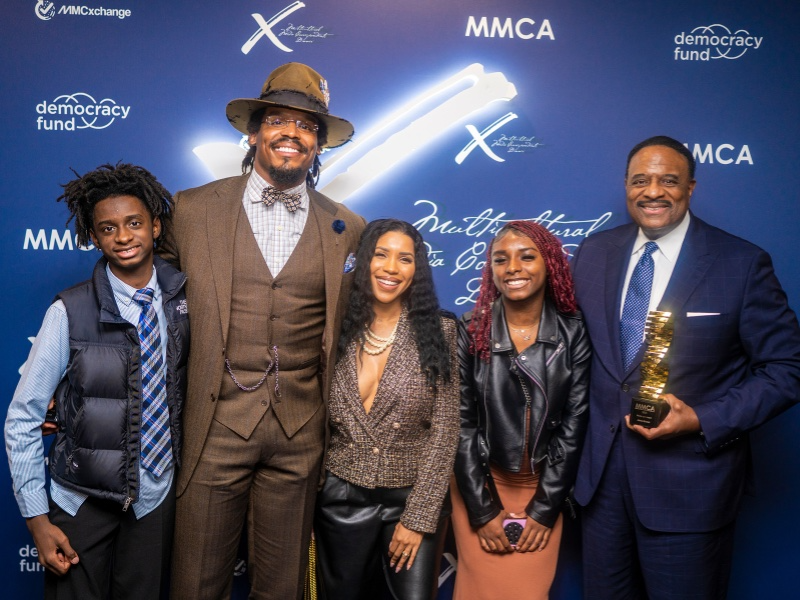
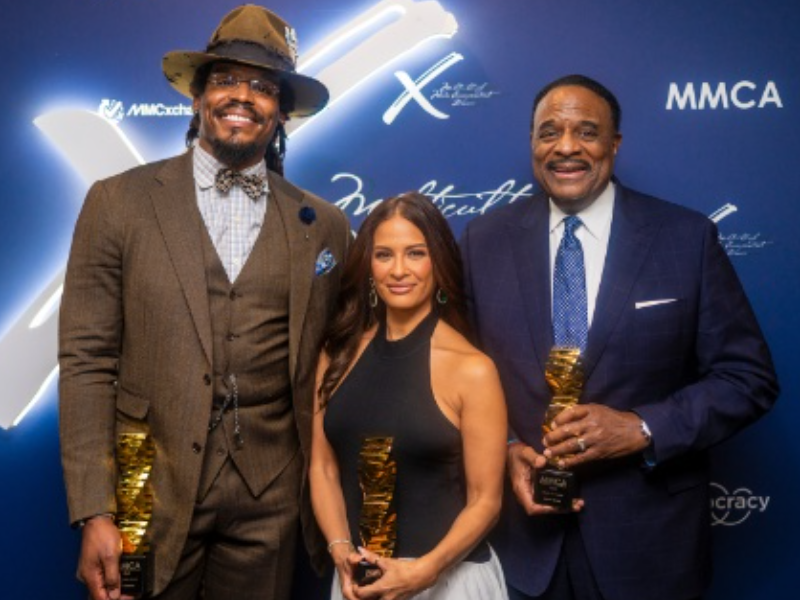
Photo Credit: Mike Style Studio (Featured L to R: Grandson John Walker, Cam Newton, Jasmin Brown, Granddaughter Jordyn Walker, James Brown)
He smiled as he talked about his grandchildren, saying he wants them to see consistency between what he says and what he does. “There’s a sermon that I have given called ‘Break the Huddle and Run the Play,’” he said.
“The athletic corollary would be if you’re on the football field and you’re standing around in a huddle, you’re not making any progress,” Brown said. “You can’t make progress in the huddle. It’s only when you’re engaged in action and moving the ball, matriculating down the field to score a touchdown. So that means a lot to me, and I stay mindful of that in everything that I do. Break the huddle and run the play.”
That’s James Brown in one line, faith in motion. It’s the same faith, focus, and drive the Multicultural Media Correspondents Association will celebrate when he receives the Media Icon Award at this year’s Gala Extravaganza in D.C. on October 27, 2025.