-

- 28 May 2026
- Comment (0)
Has Baltimore become home to professional soccer? Well, yes and no.
By Aleisha RobinsonMorgan State University
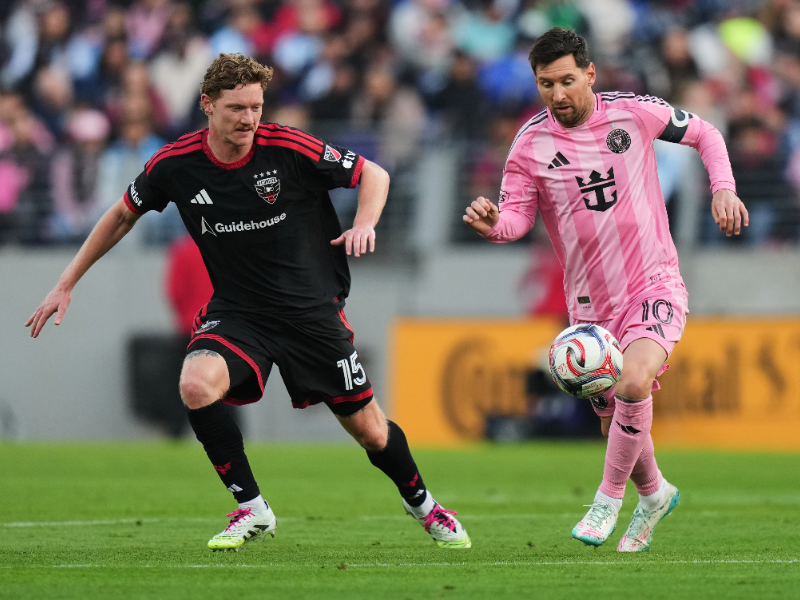
For one night, M&T Bank Stadium drew a different kind of crowd.
Fans wearing Inter Miami and D.C. United jerseys filled the stands for a high-profile match, many hoping to see super star Lionel Messi.
The turnout brought thousands to downtown Baltimore and highlighted a level of interest in soccer not typically associated with the city.
The event also underscored a broader question: Can Baltimore, long defined by the Baltimore Ravens and the Baltimore Orioles, support a stronger presence in professional soccer?
Despite growing interest, Baltimore does not have a Major League Soccer franchise. Many local fans instead support nearby D.C. United, whose proximity allows for easier access to matches but leaves Baltimore without a team of its own.
“I’m against it,” said Rushane Fullerton, a Morgan State graduate student.
“Baltimore has created its own cultural teams over the years, like the Orioles and the Ravens. So I feel like we need a soccer team of our own to represent the city.”
City officials have explored options to expand soccer in Baltimore, including a partnership with D.C. United to develop a stadium and youth programs.
Baltimore Mayor Brandon Scott has described the city as a “soccer town” and has supported efforts to grow the sport locally, particularly as a tool for youth development.
A proposal introduced during Maryland’s 2026 legislative session sought state funding for a soccer complex in West Baltimore.
The plan included a 10,000 to 12,000 seat stadium, as well as space for a youth academy and professional teams. The project was estimated to cost more than $200 million.
Scott announced plans for a stadium at Carroll Park to host an MLS Next Pro team and a professional women's team.
The legislation did not advance, leaving the proposal without a funding source and delaying any immediate plans for construction.
Supporters have said the $216 million project could return in a future legislative session, though questions remain about financing and the role of public investment. The outcome also reflects broader challenges for Baltimore, including its proximity to Washington, D.C., and Philadelphia, both of which already have established professional soccer markets.
Other cities have expanded into Major League Soccer in recent years.
Teams such as Charlotte FC, Nashville SC and Austin FC have drawn strong attendance and built local fan bases, raising questions about whether Baltimore could follow a similar path.
Some residents say local support for soccer exists but is not as visible as support for other sports.
“I think people here don’t really push for a [soccer] team because a lot of Americans focus more on sports like football and basketball,” said Javier Reid, a Baltimore-area student.
Reid added that many immigrants already follow teams from their home countries, which can limit interest in building support for a local club.
“A lot of immigrants already follow soccer from where they’re from,” Reid said. “So they’re not always focused on building something here.”
At the same time, soccer is present in Baltimore through community programs and local initiatives.
The city has invested in organizations such as Soccer Without Borders, which works with immigrant youth and uses soccer to support education, language development and community engagement.
The program received funding through the American Rescue Plan Act as part of broader efforts to expand youth opportunities in the city.
For some supporters, those programs demonstrate an existing foundation that could support a larger soccer presence.
“The D.C. United and Inter Miami game had international stars like Lionel Messi,” Fullerton said. “But I think that kind of turnout could happen again if Baltimore had its own team and similar matchups.”
Fullerton also pointed to potential economic benefits, including revenue from games and opportunities to invest in youth development.
“The revenue from games could go back into the community, especially for youth programs,” he said. “Soccer is still growing here, so that kind of investment could really help the next generation.”
The discussion comes as the United States prepares to host the FIFA World Cup 2026, which is expected to draw international attention to the sport.
Baltimore and Washington, D.C., formed a group to bid on hosting the World Cup but FIFA rejected that campaign in 2022.
While Baltimore is not among the host cities, some residents say expanding soccer infrastructure could position the city for future opportunities.
“If Baltimore had its own team or even a soccer stadium, I think the city would have a better chance of hosting something like the World Cup,” Fullerton said. “People here are loyal, and they love the sport.”